The Importance of Professional Cleaning in Healthcare Facilities
The Importance of Professional Cleaning in Healthcare Facilities
Healthcare facilities are different from regular commercial buildings. Whether it is a primary care clinic, urgent care center, emergency room, imaging center, specialty practice, or multi-location medical office, cleanliness directly affects patient safety, staff confidence, infection prevention, and the overall quality of care.
Patients visit medical facilities when they may already be sick, injured, immunocompromised, or at higher risk for infection. At the same time, doctors, nurses, technicians, and front-desk teams move through shared spaces throughout the day. This makes healthcare cleaning more than appearance. It is a structured process designed to reduce risk, support infection control, and maintain a safe environment for everyone inside the facility.
Why Cleaning Matters in Medical Environments
In healthcare settings, germs can spread through high-touch surfaces, contaminated equipment areas, bodily fluids, respiratory droplets, waiting-room traffic, restrooms, exam rooms, and shared workspaces. A surface may look clean but still carry bacteria, viruses, or other contaminants if the correct cleaning and disinfecting process is not followed.
For facilities such as urgent cares, emergency rooms, and outpatient clinics, the challenge is even greater because patient flow can be unpredictable. One room may be used for a routine visit, the next for a patient with flu-like symptoms, and the next for wound care or urgent treatment. Cleaning protocols must be consistent enough for daily use but flexible enough to respond to higher-risk situations.
A strong cleaning program helps:
- Reduce the risk of infection spread
- Create a safer environment for patients and staff
- Support compliance with healthcare standards and expectations
- Improve patient trust and comfort
- Protect the reputation of the facility
- Extend the life of flooring, furniture, and surfaces
- Reduce odors, dust, and visible contamination
- Help staff focus on patient care instead of facility concerns
Cleaning vs. Disinfecting: Understanding the Difference
One of the most important concepts in healthcare cleaning is understanding the difference between cleaning and disinfecting.
Cleaning removes dirt, dust, organic matter, and visible soil from surfaces. This step is essential because disinfectants may not work properly if a surface is still dirty.
Disinfecting uses an approved chemical product to kill or inactivate certain germs on a surface. Disinfectants must be used correctly, including proper dilution, contact time, surface compatibility, and safety precautions.
In healthcare settings, cleaning and disinfecting should not be treated as the same task. In many cases, surfaces must be cleaned first and then disinfected. Skipping the cleaning step, using the wrong product, wiping too quickly, or failing to allow the required dwell time can reduce the effectiveness of the entire process.
Areas That Require Special Attention
A healthcare facility should be cleaned with a risk-based approach. Not all areas carry the same level of exposure, and not all surfaces need the same frequency or type of cleaning.
1. Waiting Rooms and Reception Areas
Waiting rooms are high-traffic spaces where patients, family members, delivery personnel, and staff come together. Chairs, armrests, check-in counters, pens, clipboards, tablets, door handles, and payment terminals are touched repeatedly throughout the day.
These areas should be cleaned regularly and disinfected frequently, especially during cold, flu, COVID, or other respiratory illness seasons. Floors should be kept clean and dry to reduce slip hazards, and trash should be removed before it overflows.
2. Exam Rooms
Exam rooms are among the most important areas in a medical cleaning program. Each room may include exam tables, countertops, stools, chairs, medical equipment surfaces, sinks, cabinet handles, light switches, and door handles.
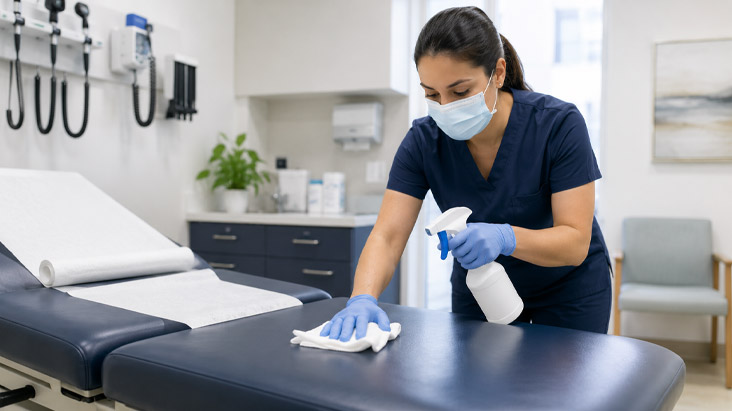
Cleaning between patients is critical. Exam tables, patient chairs, provider work surfaces, and any touched surfaces should be disinfected according to the facility’s protocol. Paper table coverings should be replaced, trash should be removed as needed, and supplies should be restocked without contaminating clean areas.
3. Urgent Care and Emergency Treatment Areas
Urgent care and emergency rooms often handle higher patient volume, faster room turnover, and a wider range of medical situations. These areas require careful attention to blood, bodily fluids, respiratory illness, wound care, vomiting incidents, and other potentially infectious materials.
Cleaning teams must know how to respond safely to spills, isolate contaminated materials, use appropriate personal protective equipment, and disinfect surfaces with products suitable for healthcare environments.
4. Restrooms
Restrooms in healthcare facilities need consistent cleaning and disinfection. Sinks, faucets, toilets, flush handles, grab bars, changing stations, door handles, soap dispensers, and light switches should be treated as high-touch surfaces.
Odor control is also important, but fragrance should never replace proper cleaning. Strong fragrances can bother patients with allergies, asthma, or respiratory sensitivities. A healthcare cleaning program should focus on sanitation, ventilation, and proper product use rather than masking odors.
5. Nurse Stations and Staff Work Areas
Staff areas are often overlooked because they are not always patient-facing. However, nurse stations, keyboards, phones, counters, chairs, shared computers, medication preparation areas, breakrooms, and staff restrooms can become high-touch zones.
Clean staff areas help reduce cross-contamination and support a healthier workplace. Special care should be taken around computers, electronics, charts, supplies, and sensitive documents.
6. Floors and Entryways
Floors in healthcare facilities collect dirt, moisture, debris, and contaminants from outside. Entryways, hallways, exam rooms, and treatment areas should be maintained on a regular schedule. Floor care should be performed with products and methods suitable for the surface type, whether it is vinyl, tile, laminate, sealed concrete, or another healthcare-appropriate flooring system.
Wet floors should be managed carefully to prevent slips. Cleaning teams should use proper signage, avoid blocking patient flow, and schedule deeper floor work during lower-traffic hours whenever possible.
7. Medical Waste and Trash Handling
Medical facilities often generate different types of waste, including regular trash, sharps containers, contaminated materials, and regulated medical waste. Cleaning staff should understand what they are allowed to handle and what must be managed by trained medical personnel or approved waste vendors.
A professional healthcare cleaning company should never treat all waste the same. Waste handling must follow the facility’s procedures and applicable safety requirements.
Important Steps in a Healthcare Cleaning Process
A reliable healthcare cleaning program should be organized, documented, and repeatable. The following steps are important for clinics, urgent care centers, emergency rooms, and similar medical facilities.
Step 1: Evaluate the Facility
Before cleaning begins, the cleaning company should evaluate the facility layout, services provided, patient volume, flooring type, exam room count, restroom count, waiting areas, high-touch surfaces, and any higher-risk zones.
A pediatric clinic, urgent care, imaging center, family medicine practice, and emergency care facility may all need different cleaning plans. The cleaning program should fit the actual use of the facility rather than applying a generic office-cleaning checklist.
Step 2: Create a Site-Specific Cleaning Plan
The cleaning plan should define what gets cleaned, how often it gets cleaned, what products are used, who is responsible, and how quality is checked.
This plan should include:
- Daily cleaning tasks
- High-touch disinfection points
- Exam room turnover support
- Restroom cleaning frequency
- Trash and waste handling procedures
- Floor care schedule
- Deep cleaning schedule
- Supply restocking responsibilities
- Spill response procedures
- After-hours cleaning needs
- Documentation and inspection process
A written plan helps create consistency. It also allows facility managers to hold the cleaning provider accountable.
Step 3: Identify High-Touch Surfaces
High-touch surfaces require special attention because they are touched frequently by multiple people. These may include door handles, light switches, armrests, countertops, exam tables, patient chairs, faucet handles, toilet handles, keyboards, phones, touchscreens, payment terminals, clipboards, cabinet handles, elevator buttons, and handrails.
In a healthcare setting, these surfaces should be disinfected more frequently than low-touch surfaces.
Step 4: Use Appropriate Healthcare-Grade Products
Not every cleaning product is appropriate for a medical environment. Disinfectants should be selected based on the types of organisms they are designed to address, the surfaces being treated, manufacturer instructions, contact time, safety data, and compatibility with the facility.
Using the wrong chemical can create several problems. It may fail to disinfect properly, damage surfaces, leave residue, create respiratory irritation, or create unsafe chemical exposure for staff and patients.
Professional healthcare cleaners should understand product labels, dilution requirements, dwell times, and when different products are needed for different areas.
Step 5: Follow Proper Contact Time
Disinfectants require a specific amount of time to remain wet on the surface to work properly. This is often called dwell time or contact time.
One common mistake in non-specialized cleaning is spraying a disinfectant and immediately wiping it away. If the product does not remain on the surface for the required time, it may not perform as intended.
Healthcare cleaning teams should be trained to follow the product label exactly.
Step 6: Prevent Cross-Contamination
Cross-contamination happens when germs are moved from one area to another. This can occur through dirty cloths, mop heads, gloves, carts, buckets, or improper cleaning sequence.
To reduce this risk, cleaning staff should use proper color-coded cloths or area-specific supplies, change cloths frequently, clean from cleaner areas to dirtier areas, and avoid using the same tools in restrooms and clinical areas.
Step 7: Clean in the Correct Order
The order of cleaning matters. A common approach is to clean from high to low, clean to dirty, and dry to wet. This helps prevent re-contaminating areas that were already cleaned.
For example, in an exam room, staff may begin with higher surfaces and equipment touchpoints before moving to lower surfaces and floors. Restrooms should typically be cleaned with separate tools and procedures from patient care areas.
Step 8: Document Completed Work
Documentation is especially important in healthcare cleaning. A cleaning company should be able to provide checklists, logs, inspection forms, and communication notes when needed.
Documentation helps facility managers verify that tasks were completed. It also supports accountability when there are concerns, complaints, inspections, or infection-control reviews.
Step 9: Perform Quality Checks
Cleaning should not rely only on trust. Supervisors should inspect the work, review high-touch areas, check restrooms, verify supply levels, and communicate with facility leadership.
A strong cleaning company will correct issues quickly and adjust the plan when patient volume, hours of operation, staffing, or facility needs change.
Step 10: Schedule Periodic Deep Cleaning
Daily cleaning is important, but healthcare facilities also need scheduled deep cleaning. This may include detailed floor care, baseboards, vents, upholstery, walls, corners, waiting-room furniture, restroom detail work, and areas behind or under movable furniture.
Deep cleaning helps address buildup that routine cleaning may not fully remove.
What to Consider When Choosing a Healthcare Cleaning Company
Choosing a cleaning company for a medical facility should not be based only on price. Healthcare cleaning requires training, experience, consistency, and accountability.
Medical offices, urgent care centers, and clinics in the Houston area should look for a provider with experience in professional healthcare facility cleaning, including high-touch disinfection, restroom cleaning, exam room cleaning, and facility-specific cleaning plans.
Before hiring a cleaning provider, facilities should consider whether the company has experience with healthcare environments, uses appropriate disinfectants, understands contact time, provides a written cleaning plan, carries proper licensing and insurance, trains staff on bloodborne pathogen precautions, understands patient-sensitive environments, provides supervision, responds to urgent cleaning needs, and documents completed work.
A regular commercial cleaning company may be qualified to clean offices, retail spaces, or general buildings, but that does not automatically make them qualified for healthcare cleaning.
Why Licensed and Experienced Healthcare Cleaning Matters
Healthcare facilities need a cleaning partner that understands the responsibility of the environment. A licensed and experienced healthcare cleaning company brings more than labor. It brings systems, training, supervision, safety awareness, and the ability to work within a medical setting.
Better Infection-Control Support
Experienced healthcare cleaners understand that certain areas require more attention, certain surfaces require specific products, and certain incidents require special handling. This helps reduce the chance of missed high-risk areas.
Safer Product Use
Healthcare cleaning companies are more likely to use appropriate disinfectants and follow label instructions. This matters because improper chemical use can affect patients, staff, equipment, and surfaces.
More Consistent Results
Medical facilities need dependable cleaning every day. Experienced providers use checklists, schedules, inspections, and trained staff to reduce inconsistency.
Reduced Liability Risk
A facility that hires an unqualified cleaning company may face issues with safety, contamination, chemical misuse, staff exposure, or poor documentation. A properly insured and experienced provider helps reduce those risks.
Better Staff and Patient Confidence
Patients notice cleanliness. Staff notice cleanliness. A clean facility sends a message that the organization is professional, careful, and committed to safety.
Proper Handling of Sensitive Environments
Medical offices are different from normal offices. Cleaning teams may work around patient information, medical equipment, exam supplies, sharps containers, medication areas, and treatment spaces. Training and professionalism are essential.
Cleaning Is Part of the Patient Experience
Patients may not know the details of a facility’s infection-control program, but they do notice the environment. A clean waiting room, fresh restroom, well-maintained exam room, and organized facility can improve trust before the provider even enters the room.
For healthcare organizations, cleanliness supports both safety and reputation. It shows patients that the facility cares about their health, comfort, and experience.
Final Thoughts
Healthcare cleaning is not just a maintenance task. It is an important part of patient safety, infection prevention, staff protection, and facility operations.
Clinics, urgent care centers, emergency rooms, and other medical facilities should work with cleaning professionals who understand healthcare environments and follow proper cleaning and disinfecting procedures. The right cleaning partner can help create a safer, cleaner, and more professional environment for patients, providers, and staff.
For medical facilities, the goal is not simply to look clean. The goal is to maintain a space that supports health, safety, and confidence every day.